

You've been bouncing from doctor to doctor, desperately searching for answers. One tells you it's a disc bulge pressing on your nerve. Another insists it's piriformis syndrome: a tight muscle in your buttock. You've had the MRI, tried the treatments, but you're STILL in pain.
Here's what I've learned after helping 5,200+ people find relief: The diagnosis matters less than you think. What REALLY matters is understanding WHY your body created the problem in the first place: and that's where most practitioners completely miss the mark.
But first, let's clear up the confusion so you understand what's actually happening in your body.
1. DISC BULGE SCIATICA: WHEN YOUR SPINE COMPRESSES THE NERVE
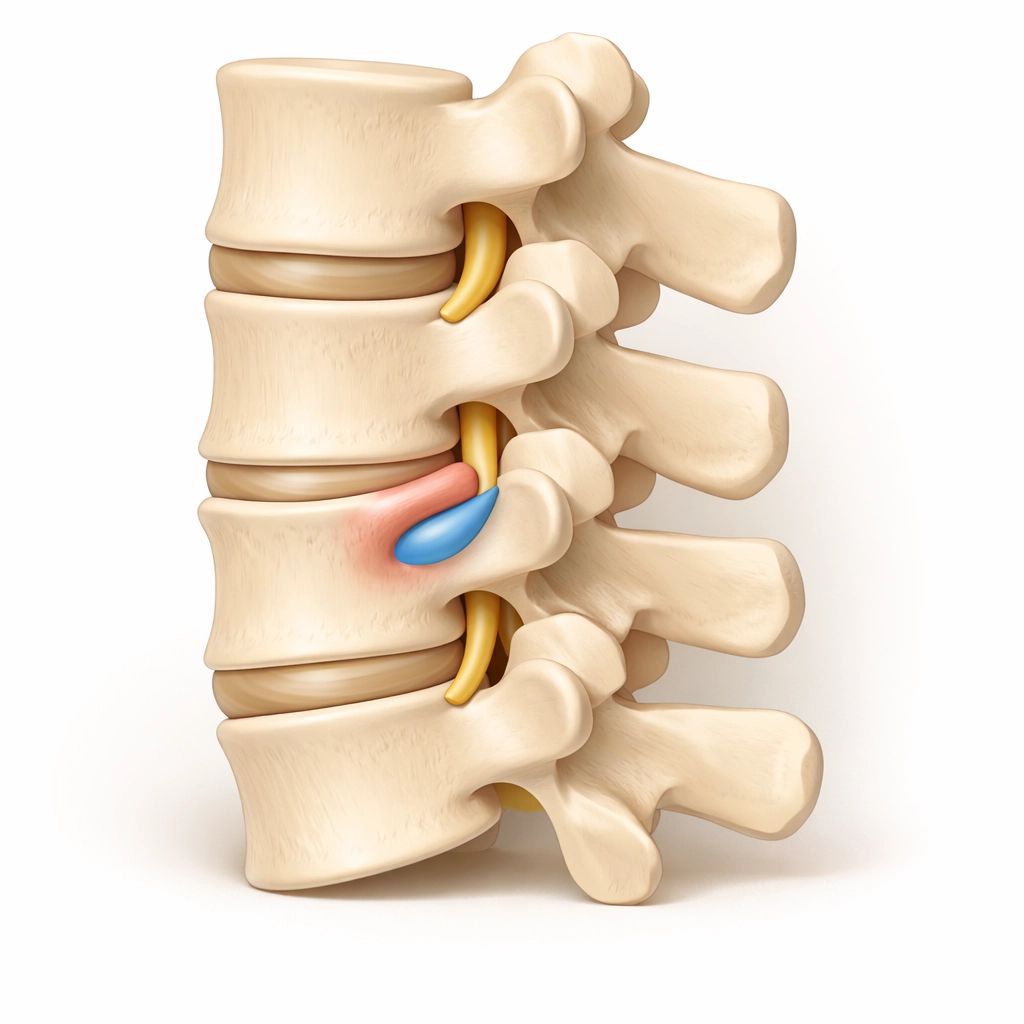
A disc bulge (sometimes called a "slipped disc") happens when the soft cushion between your vertebrae pushes out and can press on your spinal nerve root: usually at the L4-L5 or L5-S1 levels in your lower back. A bulge is NOT the same thing as a herniation—herniations are typically more severe (and involve more disc material pushing out).
The pain from a disc bulge typically:
• Starts in your lower back and radiates DOWN your leg following the sciatic nerve pathway
• Feels worse when you bend forward, twist, or sit for long periods
• Often feels most intense first thing in the morning and gradually improves as you move throughout the day
• May cause numbness, tingling, or weakness traveling down your leg: sometimes all the way to your foot
Your MRI will show the bulge clear as day. Your doctor will point to the image and say, "There's your problem." And technically, they're right: BUT they're only seeing half the picture.
2. PIRIFORMIS SYNDROME: WHEN YOUR BUTTOCK MUSCLE TRAPS THE NERVE
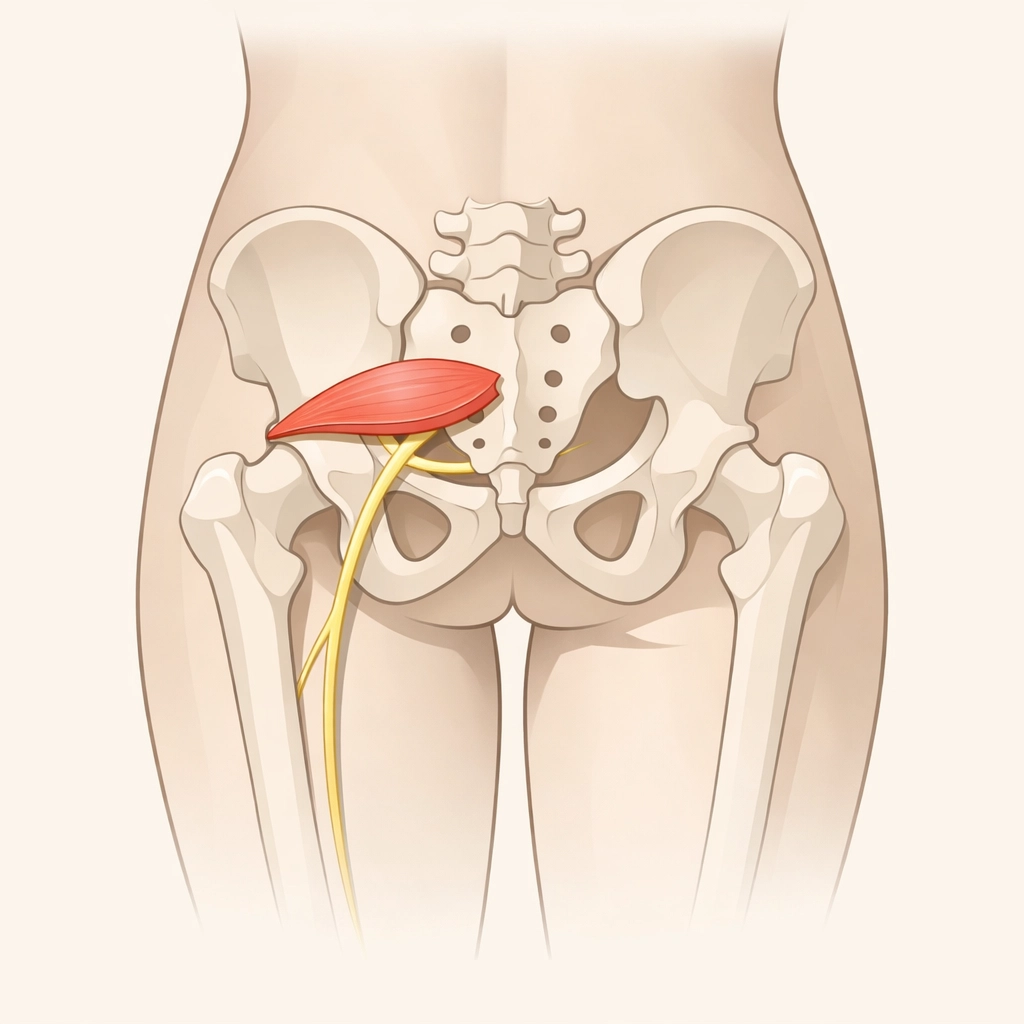
Piriformis syndrome is sneakier. Your piriformis muscle sits deep in your buttock, and the sciatic nerve usually runs underneath it—BUT true piriformis syndrome is most relevant in the 15–20% of people whose sciatic nerve pierces directly THROUGH the piriformis muscle (yep, your anatomy can literally set you up for this). When this muscle gets tight, inflamed, or goes into spasm, it can squeeze the sciatic nerve like a vice.
The pain from piriformis syndrome typically:
• Centers in your buttock area with deep, aching pain
• Worsens with prolonged sitting: especially in a car or on soft surfaces
• Gets aggravated by specific movements like climbing stairs, squatting, or rotating your leg outward
• May radiate down your leg BUT often feels more localized to the hip and upper thigh
Here's the catch: Your MRI might look completely NORMAL. No disc bulge. No herniation. Nothing. That's because standard imaging doesn't show muscle dysfunction or nerve compression happening in the buttock area.
So your doctor sends you to physical therapy for "piriformis stretches," you foam roll until you're bruised, and you're STILL stuck in the same painful cycle.
3. THE REAL QUESTION ISN'T "WHICH ONE DO I HAVE?": IT'S "WHY DID THIS HAPPEN?"
**After working with thousands of sciatica sufferers, I can tell you this with absolute certainty: Whether it's a disc bulge OR piriformis syndrome, the ROOT CAUSE is almost always the same: **
IMBALANCE.
Your body doesn't wake up one day and randomly decide to bulge a disc or spasm a muscle. Something created the conditions for this to happen. And in 95 to 97% of cases I've seen, it comes down to muscular imbalances, postural compensation patterns, and asymmetries that developed over months or YEARS.
Think about it:
• IF one side of your body is tighter than the other, your spine starts rotating and tilting
• IF your pelvis is twisted or elevated on one side, it creates uneven pressure on your discs
• IF certain muscles are overworking while others are weak and underactive, something's going to give
Eventually, either a disc bulges from the uneven pressure OR a muscle like the piriformis goes into protective spasm trying to stabilize an unstable joint. Sometimes BOTH happen.
Traditional treatments focus on the symptom: the bulge, the tight muscle: without addressing the underlying imbalance that CREATED the problem in the first place. That's why you get temporary relief but the pain keeps coming back.
4. WHY THE 180° SCIATICA SOLUTION WORKS FOR BOTH CONDITIONS
On average, our clients report a 50% improvement in 3 to 5 weeks.
We don't just treat your disc. We don't just stretch your piriformis. We REBALANCE your entire system so your body stops creating the conditions for sciatica in the first place.
The 180° Solution follows three specific steps:
STEP 1: BALANCE OUT IMBALANCES
This is the game-changer that's completely foreign to most traditional approaches. Instead of stretching and strengthening the painful side (which everyone instinctively does), we focus on the NON-PAINFUL SIDE.
Why? Because the painful side is usually ALREADY overstretched and weak from compensating for imbalances on the other side. When you balance out the non-painful side, you remove the tension and pressure that's pulling your body out of alignment.
This works WHETHER you have a disc bulge OR piriformis syndrome because you're addressing the root cause: the asymmetry that created the compression in the first place.
STEP 2: STABILIZE IN YOUR NEWLY BALANCED POSITION
Once we've rebalanced your body, we need to LOCK IT IN. This means teaching your nervous system to maintain this new, pain-free alignment through specific stabilization exercises.
Your body has been compensating for so long that returning to balance feels foreign at first. Step 2 ensures your muscles, joints, and nervous system all learn to work together in this corrected position.
STEP 3: RETURN TO NORMAL SLOWLY AND WISELY
This is where most people sabotage their progress. They start feeling better and immediately jump back into all the activities that got them into trouble in the first place.
We guide you through a strategic return to normal life: work, exercise, daily activities: in a way that BUILDS on your progress instead of undoing it.

5. BUT WHAT IF MY MRI SHOWS A MASSIVE DISC BULGE?
I hear this concern all the time. "Dean, my MRI looks terrible. My doctor says the disc is really pressing on the nerve. How can balancing my body possibly help?"
Here's the truth that might surprise you: Studies show that LOTS of people walk around with disc bulges and herniations on their MRI but have ZERO pain. The bulge itself isn't always the problem: it's the INFLAMMATION and PRESSURE around the nerve that creates your symptoms.
When you rebalance your body, several things happen:
• The twisted, rotated position of your spine gets corrected, which reduces pressure on the affected disc
• Inflammation around the nerve decreases because you've eliminated the constant irritation from poor positioning
• Blood flow improves to the area, promoting natural healing
• Your piriformis and other supporting muscles can finally RELAX instead of staying in constant protective spasm
The result? Even IF the bulge is still visible on imaging, your SYMPTOMS dramatically improve or disappear entirely.
That's why 5,200+ people have found relief with this approach: including many who were told they "needed surgery."
6. THE FOMO IS REAL: WHAT ARE YOU WAITING FOR?
While you're reading this, someone else who was in your exact situation three months ago is now back to hiking, playing with their grandkids, or sleeping through the night pain-free.
They stopped obsessing over whether it was their disc or their piriformis. They stopped doing the same ineffective stretches that every YouTube video recommends. They made ONE decision: to try something that actually addresses the ROOT CAUSE of their sciatica.
**IF you've been dealing with this for months (or years), IF you've tried physical therapy, chiropractors, injections, or medications without lasting relief, IF you're tired of being told "it's just part of getting older" or "you'll need to learn to live with it": **
Then it's time to stop treating symptoms and START rebalancing your body.
The 180° Sciatica Solution has helped 5,200+ clients find relief by doing what traditional treatments miss: addressing the IMBALANCES that created your disc bulge or piriformis syndrome in the first place.
You don't need to keep suffering. You don't need to accept surgery as your only option. You just need a different approach: one that actually makes sense.
Visit us at Sciatica Relief Now to learn more about how we can help you join the thousands who've already found relief. OR reach out directly: I personally review every inquiry because I know how desperate you are for answers.
Your body CAN heal. You CAN get back to the activities you love. But first, you need to stop doing what isn't working and START addressing the real problem.
The question isn't whether you have a disc bulge or piriformis syndrome. The question is: How much longer are you willing to wait before you try something that actually works?
#sciatica #sciaticapain #sciaticatreatment #discbulge #piriformissyndrome #backpainrelief #sciaticasolution #painrelief #nonsurigcal