

You've been told you have sciatica. But here's the problem: that's like saying you have "car trouble" without knowing IF it's the engine, the transmission, or just a flat tire.
I've worked with 5,200+ people who came to me confused, frustrated, and bouncing between doctors who gave them vague diagnoses and cookie-cutter treatments that didn't work. Why? Because they were treating the WRONG type of sciatica.
The shooting pain down your leg might feel the same whether it's coming from a disc, stenosis, or your piriformis muscle: but the way you fix each one is completely different. And IF you're doing exercises designed for a herniated disc when you actually have stenosis? You're making things WORSE, not better.
Today, I'm going to show you exactly how to tell what's really causing YOUR pain: and more importantly, what to do about it.
1. HERNIATED DISC SCIATICA: THE SHARP, BURNING CULPRIT
This is the most common type: accounting for about 60-70% of sciatica cases I see. Here's how to know IF this is you:
Your pain is SHARP, burning, or shooting: like electricity running from your lower back down one side of your buttocks into your leg (usually just ONE leg, not both). It might go all the way to your foot, and certain toes might feel numb or tingly.
But here's the KEY diagnostic clue: Your pain gets WORSE when you sit, bend forward, or stand for long periods. Think about it: IF sitting at your desk makes your pain flare up, or IF you dread that morning drive to work because being in the car kills your leg, you're likely dealing with a disc issue.
Why? Because when you bend forward or sit, you're putting MORE pressure on the front of your disc, which pushes the herniated material BACKWARD onto your nerve. It's like squeezing a jelly donut: the jelly goes out the back.
The good news? Most people with disc sciatica feel BETTER as the day goes on after they get up and move around. That morning stiffness and pain? It typically improves with gentle movement (not just any movement: the RIGHT kind).

2. LUMBAR SPINAL STENOSIS: THE STANDING AND WALKING NIGHTMARE
Stenosis is different: and it's often misdiagnosed because the pain can feel similar to disc sciatica. But the PATTERN is your biggest clue.
IF your pain starts in your buttocks and runs down your leg (sometimes BOTH legs: that's a red flag for stenosis), and IF it gets WORSE when you stand for long periods, walk downhill, or bend backward, you're likely dealing with stenosis.
Here's what my stenosis clients tell me: "I can't stand at the kitchen counter to cook anymore." "Walking my dog is impossible after 5 minutes." "I have to lean on the shopping cart just to make it through the grocery store."
Sound familiar? That's because stenosis is a narrowing of the spinal canal, and when you stand upright or extend your back, you're making that canal EVEN NARROWER. The nerve gets compressed, and boom: pain shoots down your leg.
But here's the fascinating part: These same people feel BETTER when they lean forward, walk uphill, or sit down. Why? Because leaning forward OPENS UP that spinal canal and takes pressure off the nerve. That's why you see older folks hunched over walkers: they've unconsciously learned that forward-leaning position gives them relief.
The challenge with stenosis? Traditional PT often tells you to "stand up straight" and "improve your posture": which actually makes stenosis pain WORSE. You need a completely different approach.
3. PIRIFORMIS SYNDROME: THE SNEAKY IMPOSTER
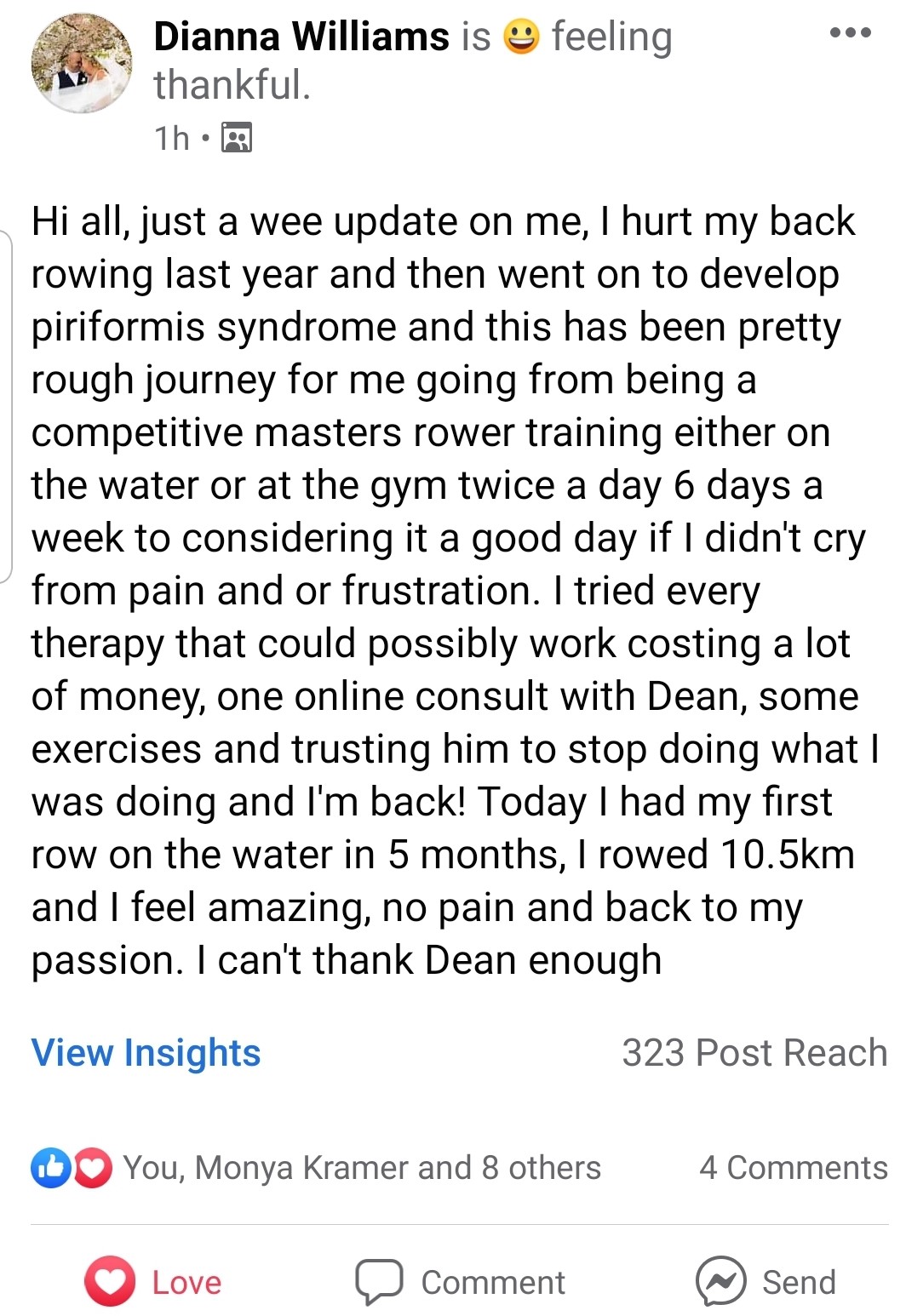
This one's tricky because it mimics sciatica perfectly: but the source isn't your spine at all. It's a tight muscle in your buttock called the piriformis, and your sciatic nerve runs right underneath it (or sometimes THROUGH it).
Here's how to spot piriformis syndrome: Your pain is focused in your buttock and radiates down the back of your leg, BUT it gets worse with specific activities like sitting on that side, crossing your legs, or getting in and out of the car. Many people tell me, "I feel like I'm sitting on a golf ball."
IF you press deep into your buttock (about where your back pocket sits) and find a tender spot that reproduces your leg pain? That's a strong indicator of piriformis involvement.
The other telltale sign: Stretching your hamstrings or doing typical "sciatica stretches" doesn't help: or makes it worse. That's because you're not addressing the actual problem, which is that tight, inflamed muscle in your hip.
WHY MOST TREATMENTS FAIL: THE ONE-SIZE-FITS-ALL PROBLEM
Here's what drives me crazy: Most doctors and physical therapists give you the SAME stretches and exercises regardless of which type of sciatica you have. They'll tell you to stretch your hamstrings, do some back extensions, maybe throw in some core work: and call it a day.
But IF you have stenosis and they're making you do back extensions? You're compressing that spinal canal MORE. IF you have a disc issue and they're having you do forward bends? You're pushing that disc material FURTHER onto your nerve. IF you have piriformis syndrome and they're treating your spine? You're never addressing the actual problem.
This is why people tell me, "I've tried PT three times and it didn't work." It's not that PT doesn't work: it's that you got the WRONG PT for YOUR specific problem.
THE 180° SCIATICA SOLUTION: A DIFFERENT APPROACH ENTIRELY
After working with 5,200+ clients, I developed a method that works for ALL three types of sciatica: because it addresses the ROOT cause that connects them all: IMBALANCE.
Whether you have disc sciatica, stenosis, or piriformis syndrome, your body has developed compensatory patterns that are keeping you stuck in pain. One side of your body is tighter, weaker, and more compressed than the other. And here's the kicker: it's usually NOT the painful side that needs the most work.
My 3-step process works like this:
STEP 1: BALANCE OUT THE IMBALANCES
We identify which side of your body is actually causing the problem (hint: it's often the OPPOSITE side from where you feel pain), and we start restoring balance through specific stretches and movements. This takes pressure off the affected nerve, whether that pressure is coming from a disc, stenosis, or a tight muscle.
STEP 2: STABILIZE IN YOUR NEWLY BALANCED POSITION
Once we've created more space and reduced nerve compression, we need to HOLD that position. This is where strengthening comes in: but not random core exercises. We're strategically building strength in the exact areas that will maintain your balanced posture and prevent re-injury.
STEP 3: RETURN TO NORMAL SLOWLY AND WISELY
This is where most people mess up. They feel better and immediately go back to doing everything they did before. Then they're shocked when the pain returns! I show you exactly how to progress back to your normal activities: walking, exercising, working: without triggering a flare-up.
YOU DON'T NEED SURGERY, INJECTIONS, OR MEDICATIONS
The medical system wants you to believe that sciatica requires aggressive intervention: injections, epidurals, maybe even surgery. And sure, for about 2-5% of severe cases, surgery might be necessary.
But for the overwhelming majority? You can get complete relief through targeted, intelligent movement strategies. No drugs. No needles. No going under the knife.
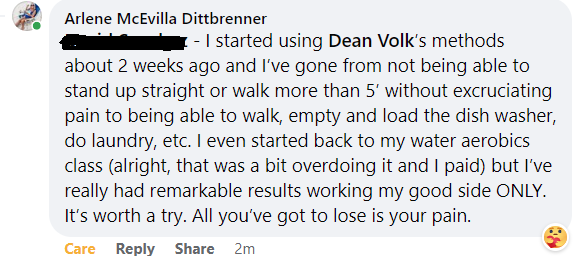
I've seen people scheduled for surgery who cancelled it after following my program for just 3-4 weeks. I've worked with folks who'd been taking pain medication for YEARS who got off it completely within 2 months. I've helped people in their 70s with stenosis who were told "this is just aging" get back to hiking and gardening.
The difference? We're not just treating symptoms. We're fixing the underlying mechanical problem that's creating the nerve compression: regardless of whether that compression is coming from a disc, stenosis, or a tight muscle.
WHAT'S YOUR NEXT STEP?
IF you're reading this and thinking, "I STILL don't know which type I have": that's okay! Most people don't. The pain patterns overlap, and sometimes you can even have a COMBINATION of issues (like disc problems AND piriformis tightness).
The beautiful thing about the 180° Sciatica Solution is that it works for all three types BECAUSE we're addressing the fundamental imbalance that's creating the problem. We're not guessing. We're not giving you generic exercises. We're identifying YOUR specific pattern and giving you a personalized roadmap to relief.
You've probably tried stretching. You've probably tried rest. You've probably tried "just pushing through it." And you're STILL in pain because you haven't addressed the real issue.
Don't spend another month wondering IF you're doing the right exercises. Don't waste more time on treatments that aren't designed for YOUR specific type of sciatica.
Visit Sciatica Relief Now to learn more about how the 180° Solution can finally give you the answers: and the RELIEF: you've been searching for. You can also check out our testimonials from over 5,200+ people who've walked this exact path and are now living pain-free.
Your sciatica has a cause. And that cause has a solution. Let's find it together.
: Dean Volk, MPT
Sciatica Relief Now, LLC
#sciatica #sciaticapain #sciaticareliefnow #nonsurical #physicaltherapy #discsciatica #stenosis #piriformissyndrome #backpain #legpain #naturalrelief