

IF sitting is the fastest way to trigger burning in your buttock, tingling down your leg, or that sharp pain that makes you stand up suddenly, I know how frustrating this is. You have probably tried changing chairs, adding a cushion, rolling a towel behind your lower back, and sitting up straighter.
Maybe each adjustment helped for a few minutes. Then the pain came back.
You are not broken. You are not crazy. You are not asking for too much. You have simply been told to focus on the chair, the painful side, or the position of your spine while the real problem may be the way your entire body is balancing itself.
Here is the no-nonsense truth: IF your sciatica keeps returning every time you sit, your body may be compensating on the WRONG SIDE.
Sitting Pain Is Often More Than A Chair Problem
Sciatica is nerve pain caused by irritation or compression involving the sciatic nerve. It can travel from your lower back or buttock into your thigh, calf, foot, or toes. Sitting for long periods can increase strain around your lower back and aggravate symptoms. Cleveland Clinic explains that prolonged sitting and poor posture can increase your risk of sciatic nerve pain.
But the chair is not always the root of the problem.
When you sit, notice what your body does without you thinking about it. Do you:
- Put more weight on one buttock?
- Lean away from the painful side?
- Cross the same leg every time?
- Tuck one foot underneath you?
- Rotate your pelvis toward one side?
- Slide toward one armrest after 10 or 15 minutes?
Those are not random habits. They are often compensation patterns. Your body is trying to create space and reduce pressure somewhere. The trouble is that the position that feels safer for a few minutes can continue the imbalance that keeps your sciatica coming back.
That is why a lumbar roll or expensive ergonomic chair often gives you temporary relief but does not solve the reason sitting hurts in the first place.
The Painful Side Is Not Always The Problem Side
This is where everything becomes 180° different.
Most people assume that the painful side must be the side that needs the most stretching, pressure, strengthening, or attention. That makes common sense. IF your right leg hurts, you work on the right leg. IF your left buttock burns, you stretch the left buttock.
BUT the side that hurts is the side reporting the problem. It is not automatically the side that created it.
Your painful side may be overloaded because the opposite side is not supporting your body correctly. Your pelvis may be rotating. One hip may be sitting higher. One side may be tight while the other side is weak, delayed, or not contributing properly.
This does not mean you should simply lean onto the opposite buttock all day. That is not the answer. Constantly shifting away from pain can create another asymmetrical position. The goal is to identify the imbalance, then correct it by working with THE OPPOSITE SIDE when your specific pattern calls for it.
That is the reversal most people never receive.
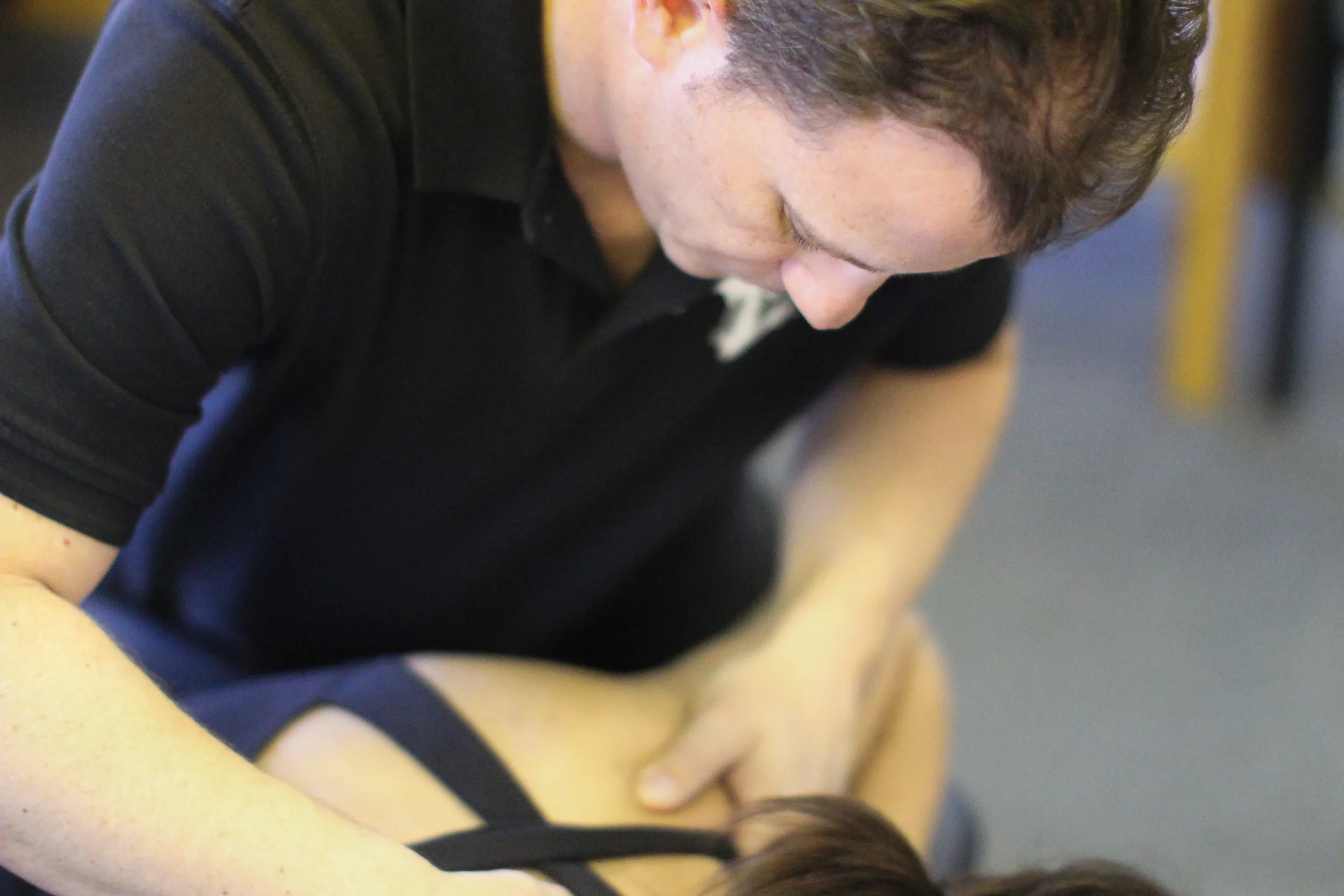
Why Common Sitting Adjustments Miss The Real Culprit
Traditional sitting advice usually focuses on the visible position: sit tall, keep both feet flat, support your lower back, and avoid crossing your legs. Those guidelines are useful starting points. They are not the whole answer.
IF your body is already imbalanced, forcing yourself into a perfectly upright position can feel like holding yourself rigidly in place. You may look aligned, but your pelvis and hips can still be working unevenly underneath you.
A 2026 review from Cleveland Clinic recommends good sitting posture and regular movement for people with sciatica. Research on asymmetric sitting has also shown measurable changes in spinal balance and pelvic position when people sit shifted to one side. You can read the published study here.
The important point is this: the evidence supports avoiding prolonged, twisted, one-sided sitting. But no chair adjustment can tell you which side of your body needs to be addressed first. That requires a personalized assessment.
I have seen this pattern for 34 years as a physical therapist. People arrive having stretched the painful side for months. They have bought cushions, changed mattresses, adjusted desks, and tried to sit straighter. Many still hurt because the underlying imbalance was never identified.
Start With This Simple Sitting Self-Assessment
You do not need to spend the rest of today analyzing every movement. Start with a short check the next time you sit.
Sit in your usual chair for 15 to 20 seconds. Do not correct yourself immediately. Pay attention to what your body naturally chooses.
Then ask yourself:
1. Which buttock feels heavier against the chair?
2. Which foot is doing more work to stabilize you?
3. Does one shoulder drift forward or downward?
4. Do you rotate your body toward or away from the painful side?
5. Does your pain change when you gently return weight to both sides?
Your answers give you useful information. They do not provide a complete diagnosis, but they show you whether your sitting position is symmetrical or whether your body is constantly escaping into one direction.
Do not force a painful movement. Do not aggressively stretch the painful side because you assume that is where the problem lives. And do not stay seated for hours just because your chair feels comfortable. Stand up or change position every 30 to 45 minutes. Even 15 to 20 seconds of easy movement gives your body a break from one fixed position.
The 180° Sciatica Solution: Balance → Stabilize → Return
Sitting is only one part of the pattern. To break sciatica, you need to address what your body is doing before, during, and after sitting. That is why my 3-step system follows this sequence:
### Balance
First, identify the body imbalance that is creating excess pressure. This is where THE OPPOSITE SIDE matters. We do not automatically attack the painful area. We look at the relationship between both sides and use specific balancing movements to relieve pressure.
### Stabilize
Once your body is balanced, you need to reinforce that position with custom strengthening exercises. This is not about doing random bridges, planks, or stretches because someone handed you a standard routine. It is about teaching your body to hold the new balanced position while you sit, stand, walk, drive, and sleep.
### Return
Finally, you return to normal activity gradually and wisely. You learn maintenance techniques that help you stay in balance while reclaiming the activities you miss, including walking, traveling, driving, playing with your family, golf, and pickleball.
That is the difference between short-term relief and a system designed to help you break sciatica for good.
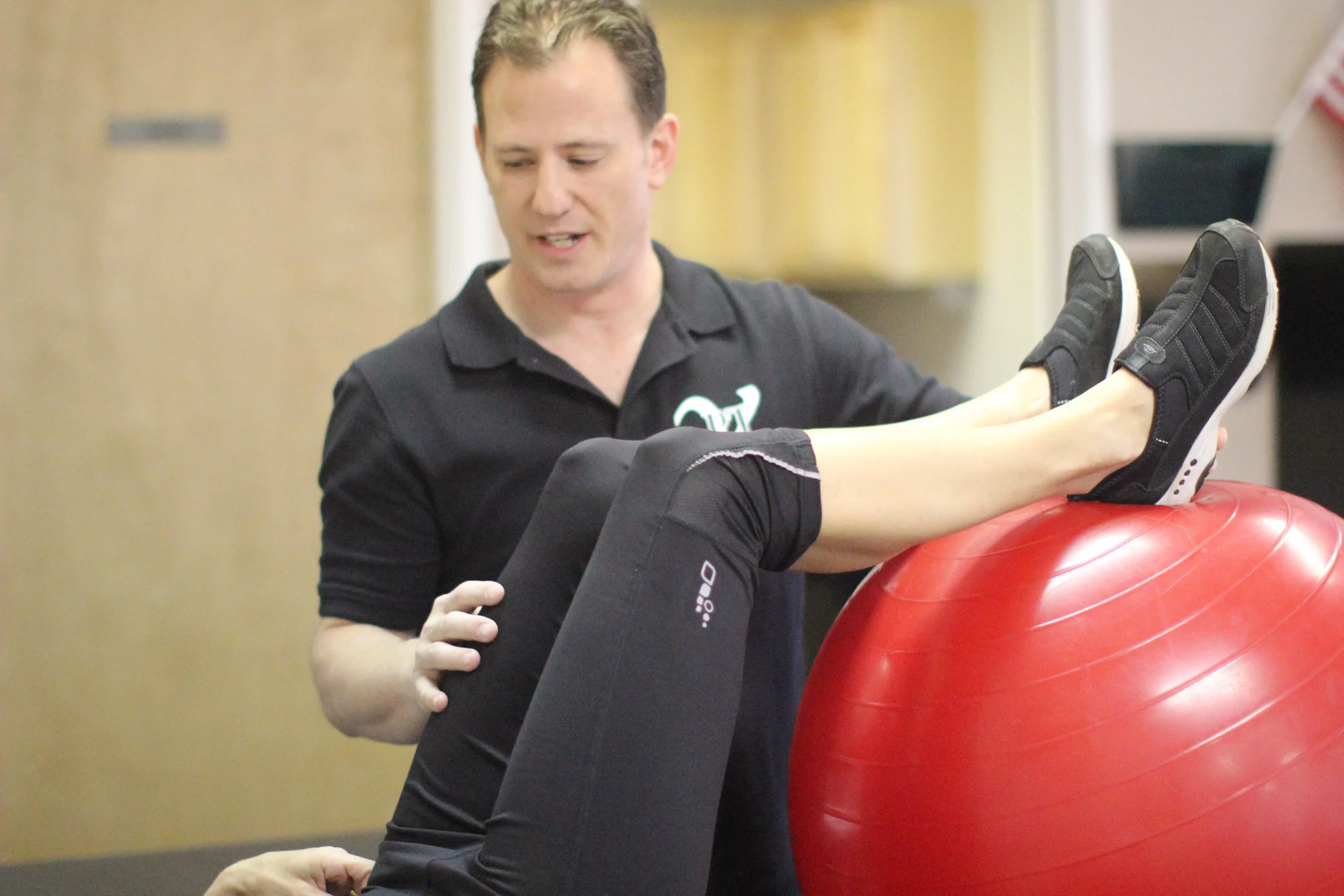
Why I Trust This Reversal
I spent 17 years practicing traditional physical therapy the way I was taught. I worked on the painful side. I followed the standard protocols. I did everything that was considered correct.
The result? Approximately 80 to 85% of my clients failed to get lasting relief. They were trying hard. They were not lazy, weak, or hopeless. The approach was backwards.
When I discovered that the answer was often on THE OPPOSITE SIDE, my success rate rose from roughly 15% to approximately 95%. That discovery became the foundation of the 180° Sciatica Solution.
Since then, I have helped more than 10,000 sciatica sufferers, including over 5,200 people online since 2018. My clients have dealt with symptoms lasting from three months to more than six decades. Many had already tried medications, injections, chiropractic care, acupuncture, decompression, physical therapy, and surgery discussions.
The proof is in the volume: 95% success, 34 years of experience, and thousands of people who wanted to reclaim their lives.
Do Not Guess Which Side You Need To Work
Your sitting pattern is personal. IF you have right-sided pain, the answer is not automatically your left side. IF you feel better leaning away from pain, that does not mean you should spend every day leaning away. IF a stretch feels good for 15 seconds, that does not prove it is correcting the cause.
You need to test the right movement for YOUR imbalance. That is exactly why I created the FREE 3-Day Sciatica Proof Lab.
The Sciatica Proof Lab is a FREE 3-day experience with three 1:1 Zoom sessions with me, 30 minutes each day. I listen to your frustrations, watch how your body moves, and manually guide you through personalized body-balancing movements. You do not have to guess which side matters. You get direct coaching so you can test the 180° approach for yourself.

Your Next Step Is Simple
IF sitting keeps bringing your sciatica back, stop blaming yourself and stop endlessly rearranging your chair. Your body may be telling you that the real issue is an imbalance between both sides.
Do not ask yourself, “How do I sit perfectly forever?” Ask a better question: “Which side of my body is doing too much, and what does the opposite side need to do?”
Then test the answer.
Join the FREE 3-Day Sciatica Proof Lab at www.SciaticaProofLab.com. You will receive three personalized 1:1 Zoom sessions with Dean Volk, International Sciatica Consultant, licensed physical therapist with 34 years of experience, and one of the leading sciatica relief experts in the United States.
You can also learn more about the 180° Sciatica Solution or contact us at info@sciaticareliefnow.net.
You are not broken. You have been looking in the wrong direction. Let us help you Break sciatica, restore balance, and Reclaim your life!!!
#sciaticarelief #sciaticapain #sittingpain #backpain #physicaltherapy #180sciaticasolution #breaksciatica #reclaimyourlife