

Reviewed by Dean Volk, MPT, November 2026
If you’re sitting or standing in tears because the lightning bolts running down your leg won’t stop, I know exactly what you’re thinking. You’re thinking about that needle. You’re thinking that IF a doctor can just inject steroids near your spine, the nightmare will finally end. I get it!! The desperation of sciatica is unlike any other pain on the planet. But before you let anyone drive a needle into your back, you deserve a clear, accurate answer about what steroid injections for sciatica actually do, and what they DON’T do.
Here’s the direct answer: steroid injections for sciatica can give some people short-term relief, but they don’t fix why your sciatic nerve got irritated in the first place. The big research reviews (Cochrane and NICE) show a small short-term benefit and no clear long-term edge over conservative care. And repeat injections carry risks you’ll want to go over with your physician.
You’re not broken. You’re not crazy. IF you’ve tried rest, stretching, medication, chiropractic, or even prior physical therapy and still feel stuck, that doesn’t mean your body’s beyond help. It often means everything you’ve been told has been backwards. Dean Volk, MPT, is a licensed physical therapist who spent 17 years inside the traditional model before developing the 180° Sciatica Solution. Today his work focuses on sciatica education and coaching. He’s helped 10,000+ sciatica sufferers break sciatica, including 5,200+ online since 2018, with a 95-97% success rate. On average, clients report a 50% improvement in 3 to 5 weeks and 85% by 8 weeks (self-reported; results vary).
What the evidence actually shows about steroid injections for sciatica
Steroid injections, often called epidural corticosteroid injections, are sometimes used when leg pain is intense and you need short-term symptom relief. That part’s real. Some people do feel better for a period of time after an injection. But the evidence-reviewed picture is more grounded than the hype. Reviews such as Cochrane and guidance such as NICE describe these injections as a short-term option for some people, not a guaranteed fix for the cause of sciatica.
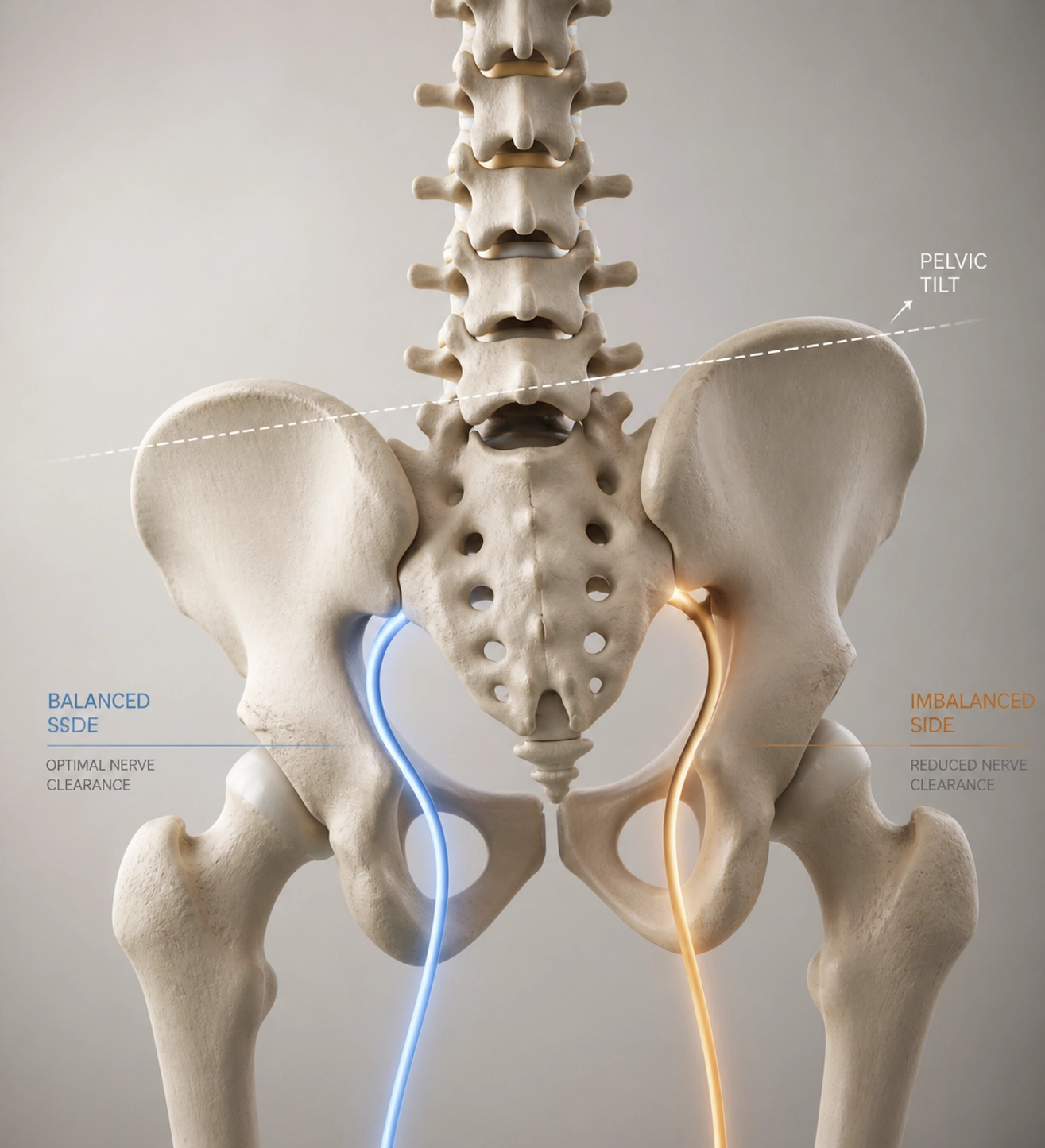
That matters because sciatica is often a movement and loading problem, not just a pain problem. IF your body’s twisted, shifted, guarded, or overloaded on one side, reducing irritation doesn’t automatically correct the imbalance driving the pressure. That’s why I tell you to think beyond symptom relief and ask the better question: what’s actually keeping the nerve irritated in the first place?
Injection vs physical therapy vs body balancing: which should you try first?
This is the question I get more than any other. So here’s the honest side-by-side.
| Steroid injection | Traditional physical therapy | Body balancing (the 180° approach) | |
|---|---|---|---|
| What it goes after | Inflammation around the nerve | The painful side, with stretching and strengthening where it hurts | The imbalance that keeps irritating the nerve, starting on the non-painful side |
| How fast you’ll know | Within days, if it’s going to help | Usually weeks | Most people feel a change in the first few sessions |
| How long it lasts | Weeks to months, and it varies a lot | Varies; flare-ups are common if the imbalance is still there | Built to hold, because the Stabilize step locks the correction in |
| The catch | It’s a needle procedure, and there’s a limit on how many you can safely get | Pushing on an irritated nerve can flare it | It feels backwards at first, because it is |
Here’s how I’d think about it. If your pain’s so bad you can’t move at all, an injection might be the thing that gets you through the door. That’s a call for you and your physician. But a shot quiets the alarm. It doesn’t fix the wiring. If you’ve already had one, or two, or three, and the pain keeps coming back, that’s your body telling you the cause is still there.

When does an injection make sense alongside body balancing?
Some of my clients come to me after an injection, and that’s fine. If a shot calms the nerve enough that you can finally move, use that window. Don’t waste it waiting for the pain to come back. That quiet stretch is the best time to start balancing your body, because the nerve’s less reactive and you can feel what’s really going on. The mistake is counting on the injection to be the plan. It’s a pause button, not a reset button.
Why short-term relief isn’t the same as fixing the problem
I know the temptation. You’ve got a trip coming up, or you just want to walk to the mailbox without bracing yourself. And yes, short-term relief matters when you’re hurting. But you also need the full picture. IF an injection reduces inflammation for a few weeks, that still doesn’t mean the deeper mechanical issue has been addressed. You can feel less pain while still moving with the same asymmetry that irritated the nerve to begin with.
My clients often tell me they feel trapped in a cycle. They get the shot, feel better for a bit, then the pain comes back because the body still hasn’t been rebalanced. That’s why our work is 180° different. We don’t chase only the painful side. We look at the opposite side, the movement pattern, the weight shift, and the position of the pelvis and spine. That’s how you start to Break sciatica instead of just quieting it down for a short window.
The 180° different path: Balance → Stabilize → Return
Instead of asking only whether you should get a shot, I want you to look at the bigger picture. Dean's 180° Sciatica Solution follows a simple framework: Balance → Stabilize → Return. This is the exact sequence we use to help you Reclaim your life without meds, injections, or surgery being the center of your strategy.
Balance
First, you balance the body. That means finding the asymmetry that’s feeding the irritation and often working on the opposite side, not the painful side. This is foreign to most people because almost every traditional approach keeps attacking where it hurts. Dean spent 17 years doing that the standard way and saw 80-85% of people fail. When he discovered that the answer was on the opposite side, success jumped to 95-97%.
Stabilize
Next, you stabilize that new position with custom strengthening exercises. This is where your body learns to hold the correction instead of snapping right back into the pattern that caused the problem.
Return
Then you return to normal life step by step. Walking, sitting, driving, sleeping, golf, travel, gardening, playing with your grandkids: this is the part that matters most to you. You’re not here to become an expert in pain. You’re here to Reclaim your life.
IF you want a deeper look at this framework, read What If The Reason Your Sciatica Keeps Coming Back Is Because You're Only Treating The Painful Side?.
Why MRI findings don’t always tell the full story
You’ve probably been told your MRI is the answer. Sometimes it helps. Sometimes it creates more fear than clarity. Many people have disc bulges or degeneration on imaging and feel little to no pain, while others are miserable and the scan doesn’t fully explain why. That’s why injections based only on an image can miss the bigger issue.
I want you to understand your body in a way that gives you direction, not confusion. IF you want more on this, read What If Your MRI Is Not Telling The Whole Story About Your Sciatica?.
Don’t wait for the next flare-up to make your move
IF you feel "okay" today but know the pain’s always one wrong move away, don’t wait. The longer your body rehearses the same bad pattern, the deeper that pattern gets wired in. That’s exactly why so many people feel like sciatica keeps coming back.
What IF the reason your last injection didn’t hold wasn’t because your back is broken, but because no one ever showed you how to balance your body first? What IF the answer starts with changing your step length, your standing shift, or the side you stretch for 15-20 seconds? I see these turnarounds every week because the body responds when you stop working on it backwards.
You may also want to read What If The Reason Your Sciatica Keeps Coming Back Is Because You're Sitting On The Wrong Side?, What If Surgery Is Not Your Only Option For Sciatica Relief?, and What If The Best Non-Invasive Sciatica Treatment Is 180° Different?.
Quick FAQ about steroid injections for sciatica
Do steroid injections help sciatica?
For some people, yes, in the short term. NICE guideline NG59 says epidural injections of local anaesthetic and corticosteroid can be considered for acute and severe sciatica. The Cochrane review of epidural corticosteroid injections for sciatica reports small short-term improvements in pain and disability for some people, but not a clear long-term advantage over conservative care.
How long does a steroid injection for sciatica last?
It varies. Some people feel relief for a few days, a few weeks, or a few months. Others feel very little change. Sources such as Mayo Clinic and PubMed-indexed reviews make the same point: response is individual, and duration isn’t guaranteed. The key thing to understand is that how long the relief lasts isn’t the same as fixing the movement imbalance or pressure pattern that triggered the sciatica.
Can steroid injections fix the cause of sciatica?
Usually, no. An injection can reduce inflammation and calm symptoms for some people, but it doesn’t automatically correct the body mechanics, loading pattern, or positional imbalance behind the irritation. IF the real issue is how your body’s moving, you still need to Balance → Stabilize → Return.
Is it safe to get multiple steroid injections?
That’s a medical decision to review with your prescribing provider. Repeated steroid injections aren’t risk-free, and the right choice depends on your health history, medications, imaging, diagnosis, and how your body responded before. This article is educational and isn’t personal medical advice. IF you’re considering repeat injections, talk with your physician about risks, expected benefit, and whether there’s a better next step for you.
Should I get a cortisone shot or try body balancing first?
If you can move at all, I’d test body balancing first, because you’ll know within a few sessions whether your body responds. If the pain’s so severe you can’t function, talk with your physician about an injection, then use that relief window to start working on the cause.
Why did my sciatica come back after the injection wore off?
Because the injection calmed the inflammation, but whatever was irritating the nerve never changed. If your body’s still shifted, guarded, or overloading one side, the nerve gets irritated all over again once the steroid fades. That’s why the pain so often returns on schedule.
Are cortisone shots and epidural steroid injections the same thing?
They’re close cousins. Cortisone is a type of corticosteroid. An epidural steroid injection puts a corticosteroid into the space around the nerve roots in your spine. People use the terms interchangeably, but your physician can tell you exactly which one you’re being offered and where it’s going.
What should I ask my doctor before getting an epidural?
Ask whether you’ve really exhausted non-invasive options, what the research says about long-term results, what the risks are for you specifically, and what the plan is if it doesn’t work. I wrote a full list here: 7 Questions to Ask Before an Epidural Injection.
The FREE 3-Day Sciatica Proof Lab
I don’t want you to believe me. I want you to test this for yourself. The FREE 3-Day Sciatica Proof Lab is a 3-day series of 1:1 Zoom sessions with Dean Volk, 30 minutes each. This is highly personalized coaching where Dean listens to your frustrations and manually guides you through body balancing movements in real time.
This is a no-brainer IF you’re skeptical, hurting, and tired of getting the same old advice. In these sessions, you’ll test whether your body responds to a 180° different approach before you go any further. IF your body doesn’t respond, I don’t want you to commit to a program. I only want you moving forward IF your body shows you the change is real.

Your next step
IF you’re asking, "Do steroid injections help sciatica?" the honest answer is this: sometimes they help short term, BUT they don’t always solve why your sciatica keeps coming back. IF you want to Break sciatica for good, you need a plan that helps you Balance → Stabilize → Return. That’s exactly what Dean has done for 10,000+ sufferers over 34+ years, including 5,200+ online since 2018.
Ready to Reclaim your life? Join the FREE 3-Day Sciatica Proof Lab at www.SciaticaProofLab.com. You can also reach us at info@sciaticareliefnow.net.
#sciatica #sciaticarelief #steroidinjectionsforsciatica #backpain #deanvolk #sciaticaprooflab #noninvasivesciaticatreatment #180degreesciaticasolution