

It is 2:00 in the morning. You are staring at the ceiling because your leg is burning again. You shift to your left side. Then your right side. Nothing works.
The next morning, getting into the car feels like a negotiation with your own body. A short trip to the grocery store leaves your back tight, your hip irritated, and your leg sending that familiar electric pain below the knee.
You have already tried medication, injections, physical therapy, chiropractic adjustments, stretching, and perhaps even surgery. You are exhausted. You are skeptical. You are wondering if this is simply your life now.
You are not broken. You are not crazy. You are not asking for too much.
But IF your sciatica keeps returning after every temporary improvement, everything you have been told may be looking in the wrong direction. Literally.
The painful side may only be the messenger
Most people assume that if the right leg hurts, the right leg must be the problem. So the painful side gets stretched, pressed, adjusted, strengthened, and repeatedly irritated.
That approach makes sense on the surface. BUT the body does not always work that way.
Your painful leg may be reacting to an imbalance created somewhere else. The pelvis tilts. The spine adapts. One hip rotates. One side of your body works harder to keep your eyes level and your balance steady. Over time, that compensation can load the sciatic nerve and create the symptoms you feel.
The pain is real. The location is real. But the source is not always on the painful side.
This is why body balancing is so important. Before you keep forcing exercises into the side that hurts, you need to understand what the rest of your body is doing.

What does a leg length difference have to do with sciatica?
A leg length difference means one leg functions as longer or shorter than the other. Sometimes the difference is structural, meaning the bones are actually different lengths. Other times it is functional, meaning the pelvis, hip, knee, ankle, or muscles create the appearance of a shorter or longer leg.
That distinction matters.
If one side is shorter, the pelvis may tilt to compensate. Your spine then adapts to keep your shoulders and head balanced. Your hip, knee, and foot can also change position during standing and walking.
The body is trying to keep you upright. It is not trying to hurt you. But after months or years of compensation, the extra load can create irritation around the lower back, pelvis, hip, and sciatic nerve.
Research on leg length inequality has documented pelvic tilt, pelvic rotation, functional spinal curves, and altered loading patterns. Larger and long-standing differences have a clearer relationship with radiating pain, especially on the longer-leg side. Smaller differences can still matter when combined with stiffness, weakness, previous injury, joint changes, or years of one-sided movement.
The important point is this: a measurement alone does not tell the whole story. You must see how your body responds when the imbalance is changed.
The short side does not automatically need a lift
Here is where many people get stuck. They hear that one leg is shorter and immediately assume the answer is a lift under that foot.
Sometimes a lift is appropriate. But a lift is not a no-brainer solution for every person with sciatica.
A lift changes the height under your foot. It does not automatically correct the compensation pattern your body has built over years. If the pelvis is already tilted, adding height without understanding the full pattern can change the load again without addressing the reason your nerve is irritated.
You need to know whether the difference is structural, functional, or part of a larger body imbalance. You also need to know which side is driving the compensation.
That is where Dean Volk’s 180° approach is different.
The 180° reversal: look at the opposite side
For 17 years, I worked as a traditional Physical Therapist and followed the standard approach. I treated the painful side because that was what I had been taught. The results were not good enough. Approximately 80-85% of my clients failed to get lasting relief.
That failure forced me to look again.
I discovered that the answer was often on the opposite side. The side that did not hurt was influencing the painful side. When I began balancing the non-painful side and correcting the body’s compensatory patterns, my success rate changed from approximately 15% to 95%.
That is the foundation of the 180° Sciatica Solution.
IF your right leg hurts, the left side of your pelvis, hip, trunk, or leg may be contributing to the pattern that keeps loading the right side. IF the shorter side is creating a pelvic tilt, the longer side may become the side carrying more force. IF you only attack the painful side, you keep chasing the messenger.
You must find the imbalance first.
In many cases, the right movement on the opposite side creates a noticeable change within 15-20 seconds. That response does not replace a full assessment, but it gives you valuable information. Your body is telling you which direction reduces the irritation.
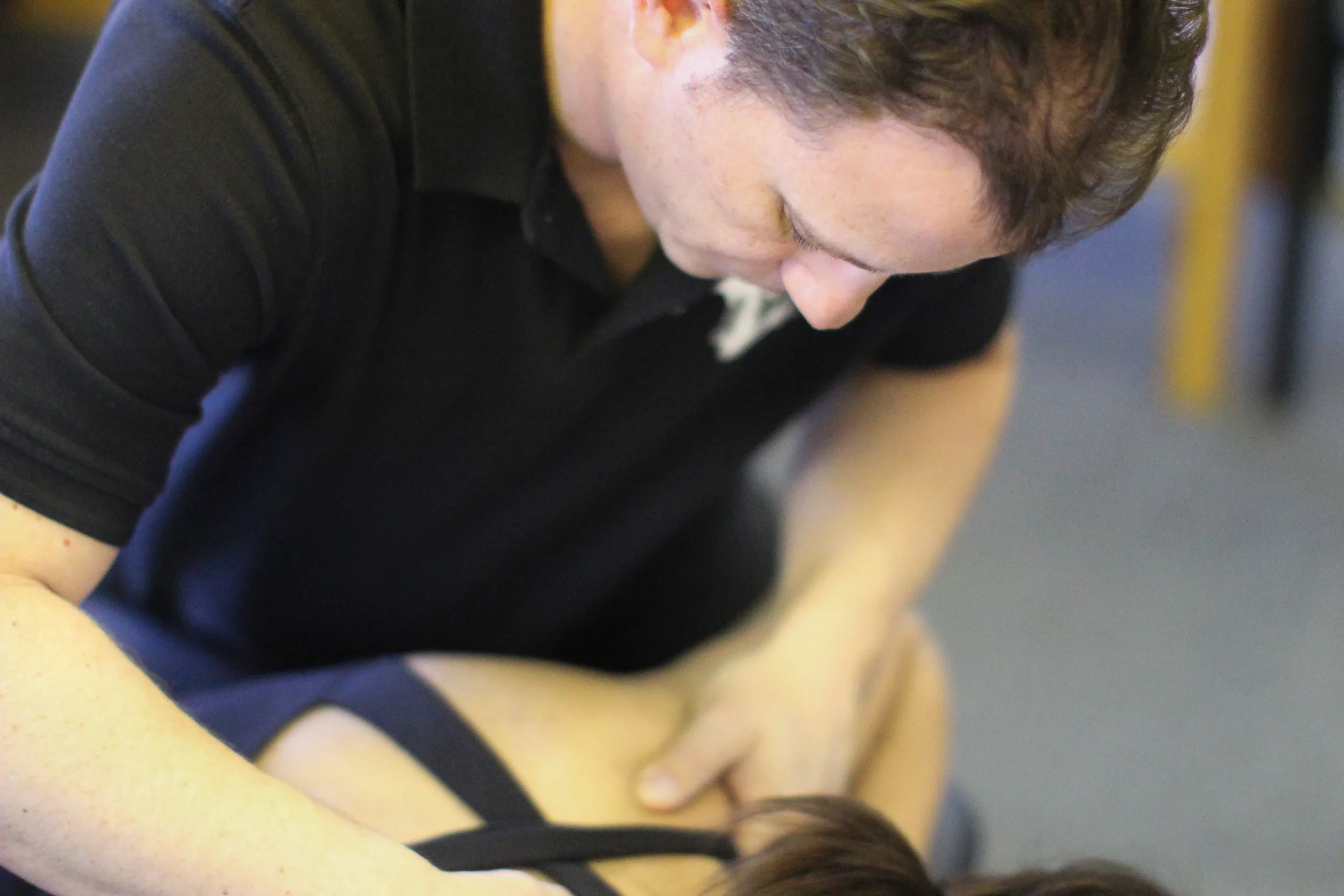
How body balancing fits into the 3-step system
My system is simple: Balance → Stabilize → Return.
**### Balance
First, we identify the pattern that is keeping your body under uneven stress. This can involve the pelvis, hips, legs, spine, and the non-painful side. The goal is to reduce pressure and calm the irritated nerve by correcting the imbalance, not by repeatedly attacking the area that hurts.
**### Stabilize
Once your body finds a more balanced position, you need specific strengthening exercises for sciatica and stabilization movements to keep it there. This is not about doing hundreds of crunches or forcing heavy exercises through pain. It is about teaching your body to hold the new position.
**### Return
Finally, you return to the activities that matter to you. Walking. Driving. Sleeping. Traveling. Playing with your family. You learn how to maintain your balance while moving through daily life so your sciatica does not keep coming back.
This is how you move beyond temporary sciatica relief and begin to reclaim your life.
What my experience shows
I am Dean Volk, MPT, International Sciatica Consultant, a 34-year Physical Therapist, and one of the leading sciatica relief experts in the United States.
I have helped more than 10,000 sciatica sufferers break sciatica, including more than 5,200 people online since 2018. My clients have dealt with symptoms for as little as 3 months and as long as 63 years. They have tried medications, injections, chiropractic care, physical therapy, acupuncture, decompression, and surgery before discovering that the approach was looking in the wrong direction.
The 180° Sciatica Solution has produced a 95-97% success rate across my work. Clients commonly follow the three-step process over 8 weeks or less, beginning with body balancing, followed by stabilization, and ending with a return to normal movement.
I do not make those statements casually. They come from 34 years of work and thousands of people who were told their pain was something they simply had to accept.
Do not diagnose yourself from a tape measure
You may be tempted to measure your legs at home or place a lift inside your shoe immediately. Do not guess.
A clinical assessment can distinguish between a true bone length difference and a functional difference created by pelvic position, joint stiffness, or muscle imbalance. A standing evaluation can also show how your pelvis and spine respond when both feet are on the ground.
IF you have new or worsening leg weakness, loss of bowel or bladder control, numbness around the inner thighs or groin, fever, unexplained weight loss, or severe pain after trauma, seek urgent medical evaluation.
For everyone else, the next step is not more random stretching. It is finding out how your body responds to the correct movement on the correct side.
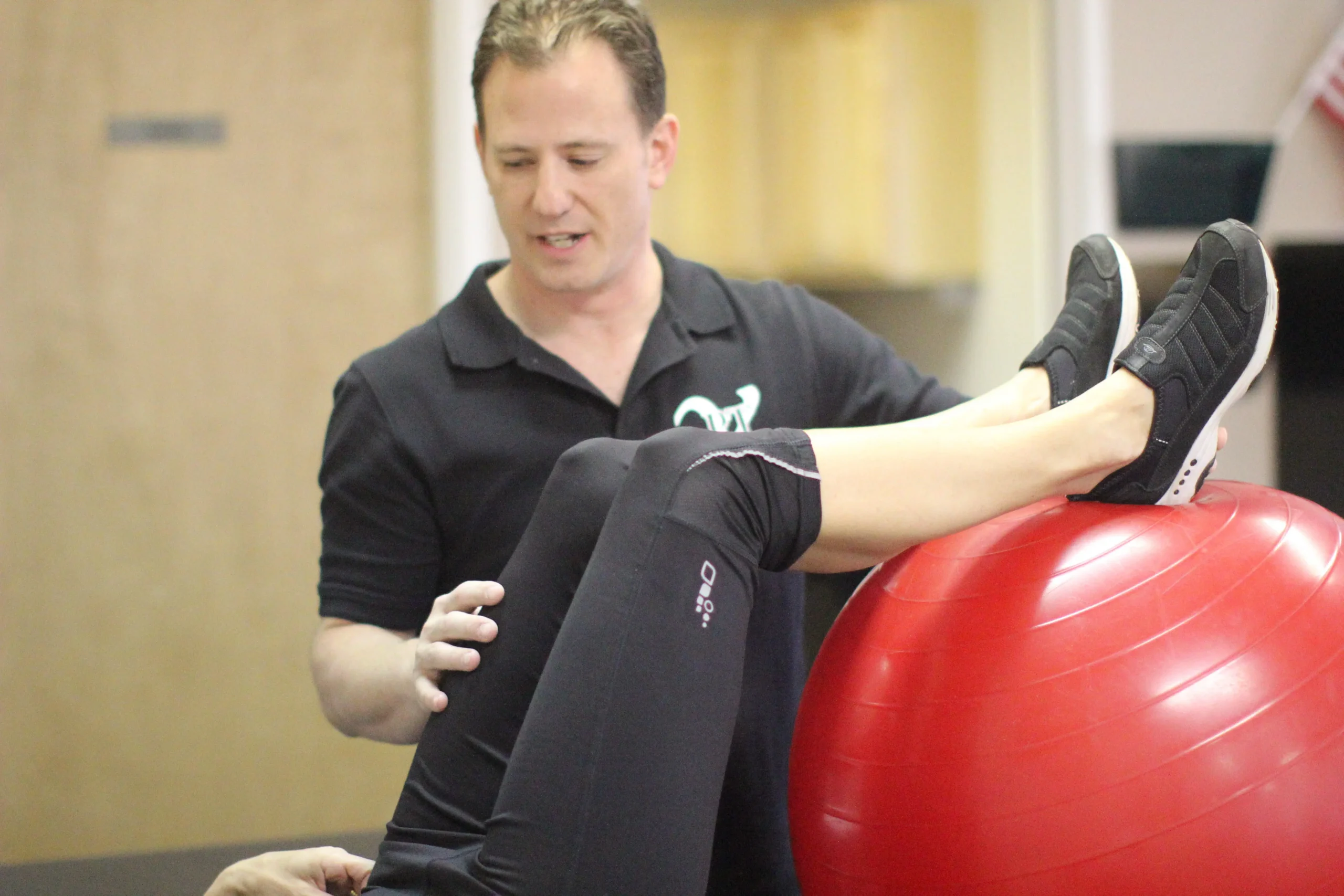
Prove the 180° approach with your own body
I know you are skeptical. You should be. You have heard promises before. You do not need another theory. You need proof that applies to your body.
That is why I created the FREE 3-Day Sciatica Proof Lab.
You receive three 1:1 Zoom sessions with me over 3 days, with each session lasting 30 minutes. I listen to your frustrations, your history, and the activities you have lost. Then I manually guide you through personalized body balancing movements in real time.
This is not a generic video. It is not a list of random sciatica exercises. It is highly personalized coaching designed to discover whether your body responds when we work 180° different and look at the opposite side.
There is no credit card and no obligation. I do not want you to commit to a program IF your body does not respond.
Visit www.SciaticaProofLab.com now to claim your FREE 3-Day Sciatica Proof Lab. Test the approach. Watch how your body responds. Then decide your next step.
IF you are ready to stop chasing the painful side and start finding the real imbalance, go to www.SciaticaProofLab.com. You can also email me at info@sciaticareliefnow.net.
You are not broken. You are not crazy. You may simply have been treated backwards. It is time to Break sciatica, follow Balance → Stabilize → Return, and reclaim your life!!
#sciatica #sciaticarelief #bodybalancing #180degreesciaticasolution #sciaticaexercises #deanvolk #sciaticaprooflab #noninvasivesciatica